
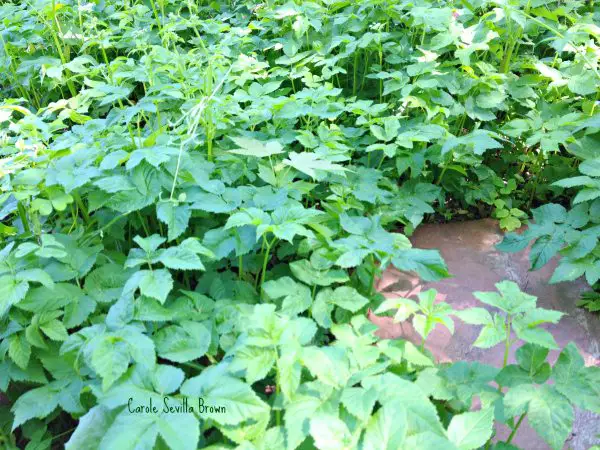
So you’ve decided that you want to help wildlife in your garden.
Congratulations!
You didn’t remember to read How to choose the best plants for your wildlife garden. Oops!
You head over to your local bookstore and find several books about wildlife gardening and you pick the one that is filled with beautiful photographs and bring it home and start reading. You’re filled with excitement and anticipation, and you think to yourself “This author must be an expert. I mean they have a book, right?”
Maybe.
All you want to know is what are the best plants for wildlife. So you make a list from this book of plants the “expert” says that the birds love. Let’s see, you’ve written down Russian Olive, Silverfleece Vine, English Ivy, and Oriental Bittersweet.
You’ve got your list and head down to the local Home Depot and you’re feeling pretty lucky because they have all of these plants in stock. You happily make your selections and can’t wait to get home to put your new “bird garden” plants in their new home.
Two years later, the ivy has crawled up the sides of your house, your trees are covered, your fences are collapsing, and you can’t find any other plants in your garden except these so-called “bird favorites.”
What went wrong?
First, don’t ever assume that just because a person has published a book, sometimes several, that they are an expert on the best plants for wildlife in your location or conditions at your property.
Second, all of those plants that you put on your shopping list because you trusted the “expert” are highly invasive and will outcompete the other plants in your garden.
Third, Home Depot will happily sell you many things that are not good for your local ecosystem. See those signs that say “vigorous grower?” Those words and any similar terms should be an immediate red-flag about the probable destructiveness of those plants.
Fourth, you didn’t read the first and second lesson in how NOT to choose plants: Throw away the USDA hardiness map, and what makes a plant invasive.
There is a better approach
Look at the photos in that book with the pretty pictures. What does a woodland garden look like? How many layers (heights) of vegetation are there? What is the structure of that garden?
What does a wildflower meadow look like? How many layers of vegetation in this type of planting?
Use the book to get some ideas for the type of garden that is best for your site.
Now look at your garden. Is it sunny or shady? Is it wet or dry? Is it in Pennsylvania or Arizona? Is the soil sandy or clay? Is your soil acid? How much rainfall does this site receive?
Knowing the answers to these questions is very important when it comes to choosing the best plants. And unless the book you’ve purchased was written specifically for your region and garden conditions, it is not the best option for choosing plants for your new wildlife garden.
Your best options for finding information about the best plants for your location is your local nature center, local native plant chapter, or local Audubon at Home chapter.
These organizations will be able to give you accurate information about the most appropriate plants for the conditions in your garden and region. Learn to make use of them. They are your resource library and are eager to help you make the best choices.
If you take the time to do a little bit of homework before purchasing any plant, you will be rewarded with a garden full of life: birds, butterflies, pollinators, amphibians, and other wildlife will make their homes in your garden if you have made informed choices.
More From Ecosystem Gardening:
 Butterfly House at Albuquerque Botanic Garden
- The Language of Ecosystem Gardening: Being Specific
- What Did Black Swallowtails Eat Before we Brought In Parsley, Dill, and Queen Anne’s Lace?
- Where the Birds Are
- Why Are There So Many Tiger Swallowtails this Year?
- The Beautiful-No Mow Yard
- Certified Monarch Waystation
Submit your review | |
