The Two Most Important Actions to Help Wildlife in Your Garden

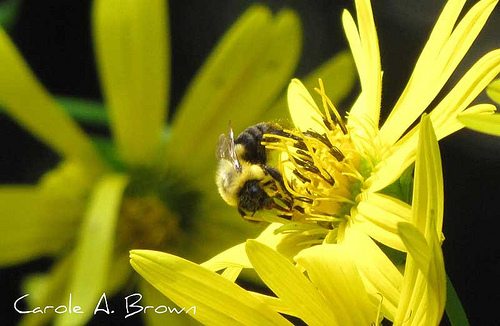
Bee-on-Cuplant

Really? You could do just two things that could help wildlife in your garden?

Yes.

Taking just these two steps would make a huge difference for the wildlife in your area. And teaching your neighbors to take the same action will magnify your efforts and help a lot more.

Now I’m not saying there’s some kind of magic bullet that would solve all of the dangers facing our native wildlife, but doing these two things will certainly help to stem the tide of their decline.

The Ecosystem Gardeners Pledge

I promise to stop purchasing/planting invasive plants and to remove them from my landscape. I promise to add more native plants to my garden. I will help my neighbors take this pledge, too

That’s it. These are the two most important things that every one of us can do to help our native wildlife and make our gardens more welcoming to them.

Promise to Stop Planting Invasive Plants and Eradicate them from your Property

This is not as easy to do as it sounds. Take a trip to any Home Depot and almost any nursery and you’ll find a large selection of invasive plants.

Why?

Well, some nursery owners simply haven’t educated themselves to the dangers of some of the plants they are selling. Others say “If I don’t sell them, someone else will. So I might as well make the money.”

So in addition to educating your neighbors, you may have to educate your local nursery owner, too.

I’ve talked about why invasive plants are so dangerous, and I’ve begun making a list of the worst invasive plants, but you need to educate yourself prior to purchasing any plants for your wildlife garden.

The easiest way to do this is to contact your local native plant society or your state conservation service and request a list of invasive plants in your area. This is easily done online by googling “invasive plants your state”

Arm yourself with this list every time you go shopping for plants. Do not buy any plant from this list, and take the time to tell the nursery owner how disappointed you are that they continue to sell these plants.

Plant More Natives

Native plants form the foundation of the food web that supports the birds, butterflies, pollinators, and other wildlife we want to attract to our Ecosystem Gardens, an idea that is most elegantly stated by Doug Tallamy, author of Bringing Nature Home.

Most gardens in this country are filled with plants from around the world, but very few plants actually native to this country. The problem with this is that it leaves wildlife with nothing to eat.

Simply put, no native plants means no wildlife. No birds. No butterflies. No frogs happily croaking through the day.

A very boring garden indeed.

No life.

Now our major purpose in Ecosystem Gardening is to create welcoming habitats for wildlife to share our little patch of the planet with. That means adding native plants every time you are purchasing new treasures for your wildlife garden.

Are you ready to take the pledge?

I hope so!

I’d love to hear about the native plants you’ve added to your Ecosystem Garden and the wildlife those plants attract. Please tell us in the comments below.

I’d also love to hear how you’re dealing with the invasive plants in your garden and neighborhood. Are you making headway against them?

© 2010, Carole Sevilla Brown. All rights reserved. This article is the property of EcosystemGardening.com If you are reading this at another site, please report that to us

Related Posts with Thumbnails
    About Carole Sevilla Brown

    Carole Sevilla Brown is a Conservation Biologist who firmly believes that wildlife conservation begins in your own back yard. Carole is an author, educator, speaker, and passionate birder, butterfly watcher,  and naturalist who travels around the country teaching people to garden sustainably, conserve natural resources, and create welcoming habitat for wildlife so that you will attract more birds, butterflies, pollinators and other wildlife.. She gardens for wildlife in Philadelphia, zone 6b, and created the philosophy of Ecosystem Gardening. Watch for her book Ecosystem Gardening, due out soon. Carole is managing editor of  Beautiful Wildlife Garden, and also  Native Plants and Wildlife Gardens. Follow Carole on twitter, @CB4wildlife and on Google+

    Comments

    1. Alison Kerr says:

      I’ll do it. I take the pledge.

      I’m pretty sure there aren’t any invasive plants in my garden, but I’ll recheck. I also plan to remove not-yet-invasive plants – barberry and burning bush for starters – which I inherited with my garden. These plants have the potential to become invasive in Kansas and I’m working my way around the garden planting alternatives.

      I’ve also been thinking about talking with local plant suppliers about the plants they’re selling. I love to be able to just pick up a few plants when I’m out and I see them, something new to pop into a bare spot in the garden, but I’d be lucky to find one or two natives anywhere except the native plant nursery, which is a considerable drive for me and requires a planned trip.

      Like most things, I think the consumer has to be demanding natives or suppliers won’t provide them. Thanks for what you do Carole, you’re bound to be affecting the demand, one reader at a time.
      .-= Alison Kerr´s last blog ..How Green is Your Garden? =-.

    2. Kathy Green says:

      Carole,

      I definitely take the Ecosystem Gardeners Pledge! Here’s to hoping that many other gardeners around the globe do also.
      .-= Kathy Green´s last blog ..Not Quite Springtime =-.

    3. UrsulaV says:

      I can definitely say that my battle against Japanese honeysuckle is being…well, “won” would be a strong term, but there have been some definitely victories. (My almost-all-weeds bed is still almost-all-weeds, but honeysuckle’s no longer one of them! I put in a sweet bay magnolia and an American hazelnut to celebrate.)

      It’s amazing how fast things grow in, too. Once I slaughter the honeysuckle in a section of wooded area, it tends to be immediately overrun with wild grape and Virginia creeper, and to a lesser extent, poison ivy. I will gladly negotiate a peace with this trio, despite having suffered abundantly from the Itching Death–they can have the woods and the sides of the driveway, I retain the right to cut them back if they invade the beds.

      Unfortunately the blackberry is beyond my power to eliminate, absent a nuclear warhead–I’ve settled for keeping it out of the beds and hacking it back whenever possible. This year we got a huge bunch of blackberry gall wasps, which seem to damage the plants in a weird fashion, which pleases me to no end. Go gall wasps! I would write them tiny thank you-notes if I spoke Wasp.

    4. Count me in. A word of caution about becoming over-enthusiastic and ripping out all the overgrown honeysuckle. I was pruning and ripping away when two huge eyes of a momma morning dove fix on me. I’d almost collapsed the branch her nest was on. I always check for critters first, now.
      .-= Marie Iannotti´s last blog ..Gardening Question of the Week: What’s the Oddest Thing Growing in Your Vegetable Garden? =-.

    5. Carole,

      I definitely take the Ecosystem Gardeners Pledge too! I also pledge to use only organic gardening methods… NO toxic chemicals!

      Do you know how I can find out what plants are native to my area?
      .-= Wendy Gabriel´s last blog ..Green Tip – Greening Your Lawn =-.

      • UrsulaV says:

        Wendy–

        Other people probably have a better method, but I’ve had some luck checking the USDA Plants database against some of the native plant lists. It has the advantage of including, on each listing, if the plant is endangered or threatened in any particular state in its range. I don’t know that it’s a huge contribution to species diversity, but if it’s endangered in North Carolina, I’m a lot more likely to find room for it.

        http://plants.usda.gov/
        .-= UrsulaV´s last blog ..Return of the Birds =-.

    6. Carole–I’ll take the pledge, too. We trend toward strictly low-water plant materials up here in Florissant–and my garden is probably anything but…yet there are a number of invasive species we have encountered in our hikes around the camp property…pretty flowers and tasty snacks for livestock, but not native.

      As a child, I remember spending a weekend pulling thistles out of the ground on some tall grass prairie property my family has in Chase County, KS. It taught me an excellent lesson about plant propagation and land-management.

      I just had a conversation w/ a colleague about a species of flax I love dearly–and I think it might be invasive…for now, though, I’m just going to keep tackling the few thistles that make their way up into the high country.

      Thanks for the post–Ariella Rogge @sanborncamps

    7. Birdy Diamond says:

      Yes, do be careful. Back in Maryland, I once bounced a baby robin out of its nest pulling Virgina creeper, and despite a trip to a wildlife rehabber, was later told that it passed.

      I’m concerned about reading that berry-bushes can be a problem, as I do plan on having a human-edible yard as well. So, you shouldn’t plant berries either? (black, rasp, blue, elder, etc.)

      Is just potting the more flyaway critters to prevent runaways enough? I’d read in the past that for certain plants, you should do so if you were going to have them – mints, for example.

      Honeysuckle & morning glory are bad??? I’ve enjoyed them in my yards before, and was planning on including them again. Is this a not-good thing to do?

      Thnx for clearing up that there just isn’t that much native stuff in this country. I first got the idea of going native from when we lived in Texas – the flowers are so lovely there!!! But even so, if you read, most of them are imports – whether from another part of this country, or from another part of the world, and have gone native since.

      So how do you define native for when you are selecting plants? We’d like to go with many natives when we get our yard, tho’ I suspect it won’t be 100%, as there are others that I like enough to want around, and after all, it’s my yard too.

      Also, what about thistle? As well as having personal meaning for me, I gather a lot of seed-eating birds like goldfinch LOVE them. (Certainly saw enough of them chowing down over the years, and the bees too!) So are they okay to let loose a bit?

      What do you think about the commercial bird/butterfly mixes? Do they know what they are talking about? Or are they full of it, and not in a good way? Are there some you would recommend over others?

      Awesome info as always! :-)

      • UrsulaV says:

        Japanese honeysuckle is bad, bad, bad. Worst of the worst. It’s a noxious weed on all the federal lists, the invasive species watches have it up there with kudzu, and if it would help, I will personally get down on my knees and beg you not to plant it.

        There’s a wonderful native trumpet honeysuckle that’s very attractive to hummingbirds and which will not spread like the crawling death. (Just check the label–Lonicera sempervirens good! Lonicera japonica bad!)

        Perennial or “wild” morning glory–better known as bindweed–you really don’t want it in your garden. It’ll smother your shrubs, it’ll kill your trees, it’s one that people tend to fight until they finally move or kill the yard down to bare dirt. Depending on climate, some of the annual morning glories can get equally overwhelming and reseed freely, so I’d read up on its behavior in your area before you plant it in the ground–it’s VERY aggressive in some places, and there are lots of threads over at GardenWeb to the tune of “Oh god, I planted this on a whim three years ago and now it’s eating the woooorld!” Better safe than sorry on that one.

        Don’t give up hope on berry bushes, though–invasive Himalayan blackberry is a big problem across the entire world, but there’s lots of wonderful berry bushes that you can plant that humans and animals alike will love and which won’t turn the yard into a sacrifice zone. (You should plant berries! Berries are great! Just not wild blackberry. Even if you didn’t do it for ecological reasons, you won’t want it in your yard–it rapidly forms massive thorny brambles and tends to eat the garden.) Raspberry can be good if the climate will allow (it will spread, so keep an eye on it) there’s tons of native elders, blueberries are truly wonderful (and native! Plant a whole hedge!), you can grow tons of strawberries in pots…there’s scads of cool plants out there that you can enjoy and which won’t do any harm (and in some cases, may do a lot of good.)

        The thing is, with a lot of these weeds, you don’t want to plant, even leaving aside ecological stuff, just because you don’t want to have to fight them forever. Himalayan blackberry, out-of-control morning glory, English Ivy or Japanese honeysuckle–it’ll make gardening into an endless battle with weeds, and who wants to do THAT?
        .-= UrsulaV´s last blog ..Return of the Birds =-.

        • Kyool! Thank’ee’s for the detailed reply. It will be very helpful for when we have our yard.

          I admit – I’m much more likely to go with it, when a good alternative is suggested, like the honeysuckle. So I will make sure we plant only the good kind. And I’m very relieved to hear that if we choose carefully, berry bushes can be on the menu.

          I’m also in the market, as it were, for a good lawn grass alternative. Don’t get me started on my opinion of the stuff, but I don’t want to go to a ground-cover free version either, as I do like some clear spaces to have for human use.

          Any suggestions? :-)

    8. Naomi Sachs says:

      I take the pledge, and will do my best to do this for my clients as well! Thanks for a great post, Carole.
      .-= Naomi Sachs´s last blog ..We Are Here! A new home for the TLN Blog. =-.

    9. Chris Herrmann says:

      i’ve been doing this for a few years now, slowly upping the number of native plants in our yard, slowly ID-ing and discarding the invasive exotics. i randomly let a small piece of yard go “wild”, to see what will come up, but have been fairly chagrined to find these areas are the ones attracting the worst exotics: Tartian Honeysuckle, Bittersweet, and (the one i’m tearing out now) Creeping Buttercup. i did manage to score a Red Twig Dogwood that sprang up behind our fence, and which i moved to a slightly better spot, and a couple Solidago specimens, but 1 or 2 wild native to 4 or 6 invasive exotics has discouraged me with respect to “allowing a piece to go wild” *wry grin* so the new strategy has been to buy/plant seeds: this year i’ve purchased and planted Blue Lupine, Common Milkweed, Swamp Milkweed, Butterfly Weed, Native Columbine, and Cardinal Flower. this is in addition to expanding my “stock” or Bee Balm, Coral Bells, Goldenrod, and other nectar producers.

      and yep, this is mostly to attract butterflies and hummingbirds. :)

    10. Mary Lou Mastrangelo says:

      I am taking the pledge, Carole! I have already done so before I even saw your website. Yesterday I dug out my Trumpet Vine, because of some horror stories I read on the internet regarding them. All that they said is true about this vine. I planted it (very unknowningly) about two years ago and the roots grew under the ground in my yard that fast. It was very close to my Kwansin Cherry Blossom Tree and i didn’t want it to kill her. I couldn’t get all the roots or I would have to dig up my whole yard. Then I started thinking how I will go and complain to the nursery that sold it to me. I was just there today and found that they now have a very large selection of native plants. I was so pleased about that. So I bought a Trumpet Honeysuckle to start, ( I was told that this vine is non-invasive and a native) and I have done some research on natives. I will be going back and buying a Tall Tickseed, Dense Blazing Star, Native American Beauty Bush! I want a Wax Myrtle, Bayberry shrub so badly to give shelter and food for my bird friends but they didn’t have it and didn’t even know what it was. I will have to check other nurseries. I’ll let you know when I get my “new” garden established. Also I dug out my Burning Bush!

    11. Inez Dickson says:

      IT’S WHAT I DO!

    Trackbacks

    1. [...] There are many beautiful native alternatives to invasive plants. Please check with your local native plant society for suggestion of native plants appropriate for your area. [...]

    Speak Your Mind

    *

    CommentLuv badge