
We are accumulating a library of the “most hated” invasive plants, which we regularly update. Removal and control of invasive species costs taxpayers more than 32 billion every year. Many of these plants were introduced for sale by the horticultural and landscaping industry to satisfy a seemingly insatiable desire to have the most exotic plants in our own gardens, and this industry has spent billions of dollars convincing us that these exotic plants are much more desirable than any native plant could ever be.
These plants have escaped cultivation and are now destroying native ecosystems because they outcompete native plants and provide no benefits to native wildlife. The real shame here is that many of these plants are still being sold by the horticultural industry, whose priority is the short-term gain of profit, versus the long-term benefit of ecosystem health, biodiversity, and fully functional ecosystem services, upon which all human life depends.
Since the priority of Ecosystem Gardening is to create habitat for wildlife and protect biodiversity, it is very important that you never include these plants in your garden, and to remove them from your garden ecosystem.
Why Invasive Plants are such a problem:
Learning From Our Mistakes–are new hybrids of invasive plants really sterile? Listening to the “experts” can get your wildlife habitat in trouble.
Sentimentality and Silk Trees–guest post by Ursula Vernon discusses why we get so sentimental over invasive plants
Doug Tallamy speaks out about the dangers of invasive plants and answers critics
The “Most Hated” Plants List:
Autumn and Russian Olive Topping the noxious list this week is Autumn Olive (Elaeagnus umbellata) and Russian Olive (Elaeagnus angustifolia), two plants in the same genus that are leaving a swath of destruction in their path.
Bamboo (Phyllostachys spp) forms an impenetrable thicket, blocking out all native plants.
Bishopweed, goutweed (Aegopodium podagraria) smothers everything in its path.
Brazilian Pepper Tree From @Gr8RedApe @CB4wildlife It will.not.die. Have burned it, buried it, smothered it w/ oil, pulled out by roots (both it & my hair). Keeps comin’ back.
Bush Honeysuckle–rapidly colonizes an area, wiping out native plants and wildlife habitat. It is really difficult to get rid of once it gets established.
Butterfly Bush–yes that plant that every butterfly gardening book tells you to plant, is highly invasive. Please do NOT plant this! The so-called experts are very wrong about this plant
- Butterfly Bush is Invasive, Do NOT Plant–when there are so many better native nectar plants for Monarchs and other Butterflies, why do some conservation organizations continue to promote this one?
- Best Native Nectar Plants for Monarchs and Other Butterflies–a list of suggestions from wildlife gardeners around the country to provide nectar for butterflies
Chinese Lespedeza Native to Asia and Australia, Chinese Lespedeza was first introduced to the U.S. in 1899 in Arlington, VA as an erosion control and forage plant. It spread across the Southeast, and now occurs throughout the U.S. and Canada.
Chinese Wisteria–grows very fast and strangles out everything in its path. Can collapse your arbors, fences, and even ruin your siding, let alone the havoc it is wreaking to native habitats. Plus it is VERY difficult to get rid of.
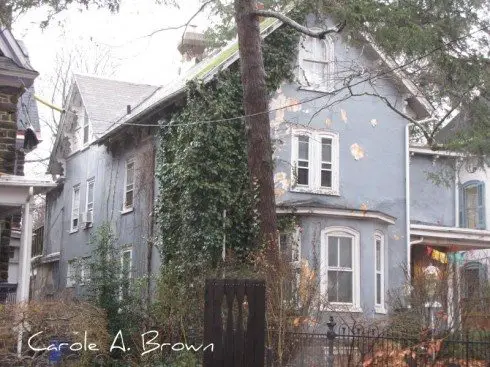
English Ivy grows fast and is easy to maintain, exactly why is continues to be sold. But it can ruin your house and destroy native habitat by shading out all native plants.
Japanese Barberry is not only destroying native wildlife habitat, but may also pose a threat to human public health.
Lesser Celandine, or Fig Buttercup (Ranunculus ficaria) greens up and blooms in very early spring, forming a dense mat that prevents the native spring wildflowers from growing.
Multi-flora Rose will quickly cover natural areas, preventing native plants from growing, but Mother Nature may be taking a hand in dealing with this highly invasive plant.
Norway Maple They grow faster than native maples and other forest trees and its dense, shallow root system makes it difficult for native seedlings to get established. They create a dense shade, under which other species cannot survive, hence my naked garden beds.
Oriental Bittersweet (Celastrus orbiculatus), a particularly noxious invader, but also used in holiday decorations by influential folks such as Martha Stewart because of its pretty berries and ability to be shaped into wreaths.
Paulownia (Princess or Empress) Tree check out the comment from a “responsible” grower of this plant
Leave Us Your Comments Below!
Click the Submit Your Comments button below to leave us your comments or questions!
We thank the follow organizations for sponsoring this page:
More From Ecosystem Gardening:
 The Coastal Maine Botanical Garden
- Mr Fox Is NOT
- Healing the Wounds, Part 4: The Wound of Exotic Species
- Butterfly Gardening for Monarchs: Got Milkweed?
- Healing the Wounds to Wildlife 1 Direct Killing
- Health Care Reform in Your Garden Say Yes to the Public Option and No to Big Pharma
- Birds in Winter Wildlife Garden
Submit your review | |
I planted chameleon plant as a ground cover and it did indeed take over. I like in Zone 5 and I've done everything I can possibly think of to get rid of them. I covered the bed in which I planted them in with layers of black plastic for a year and they came back. I covered with layers of newspaper covered with black plastic and they're back. They've been dug up and I even resorted to having someone spray them (it's not in a vegetable growing area) and they still came back. I also do not like the day lilies that came over from my neighbors yard, not the polite kind that you purchase and stay where they belong. The ones she brought from her father's farm that I have been fighting for 15+ years!
I can't find a single redeeming quality to this plant...it kills Monarch butterflies, spreads vegetatively as well as by fluff-borne seeds, vines up into the canopy and pulls down trees, and has no medicinal or edible value. In fact, the only "good" think about this plant is that it doesn't seem to have any compounds that are toxic to humans. While there are no thorns, it's still a ruinous demon to attempt to wrangle out of your trees.
There is a vining plant in south Florida called "Air Potatoes" that are taking over and destroying habitats. Could you do post on these?
The most horrible plant here in South. It stays with you forever and eventually occupies with itself any surface. It survives in clay, concrete, under the sun, shade, etc. No chemicals can help only manually removing, digging out.. again and again.
Does anyone have a suggestion on how to rid my garden, my lawn, my potted plants, etc. of violets. I put in a flat about ten years ago and CANNOT GET RID O""F THEM!!!
Does anyone have a suggestion on how to rid my garden, my lawn, my potted plants, etc. of violets. I put in a flat about ten years ago and CANNOT GET RID O""F THEM!!!
I've been seeing a lot of complaints about privet. It has invaded a protected forested area where I live.