American Robins in Your Wildlife Garden

American Robin

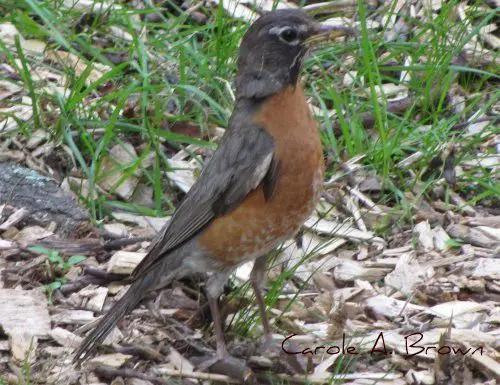
I’ve been watching the Robins pecking through last winters leaves in their search for earthworms, snails, grubs and insects.

We tend to think of sightings of American Robins as signs of spring, but Robins are in fact year-round residents in most of the lower 48 US states.

How Come I Don’t See any Robins in Winter?

During the winter months, Robins form very large flocks and move around in search of fruit. This includes holly berries, cranberries, viburnums, cedar berries, and crabapples.

Once a flock has eaten all of the berries and fruit in one location, they’ll move on to another site that still has fruit.

So if you would like to see Robins in winter at your bird garden, make sure you plant plenty of native shrubs and trees that have fruits that persist through the winter.

How to Attract Robins to your Wildlife Garden

  • Leave your leaf litter on the ground over the winter. During the warmer months, Robins eat mostly earthworms, snails, and insects. Your leaf litter provides ideal conditions for these organisms, making a ready buffet for the Robins.
  • Do not use pesticides in your garden. First off, they kill everything this bird needs to eat. Also, pesticides leave a residue on the leaves, which poisons the earthworms and ultimately the Robin. Because Robins are ground feeders, they are particularly sensitive to these chemicals. Many wildlife rehabilitaters report treating pesticide poisoned Robins through the seasons.
  • While many Robins do build their nests in tree branches, they have also adapted quite well to our buildings and decorations. I’ve seen them nesting atop porch lights, hanging flower baskets, and window ledges. You can encourage this by building a platform for nesting.
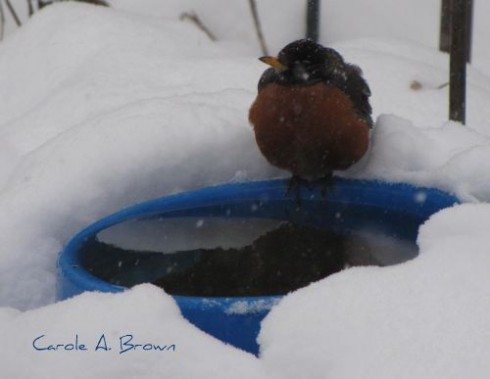
  • Provide water. Even during the winter when there was over 4 feet of snow on the ground, the Robins were lined up at the heated dog water bowl I keep for the birds to drink from. It is not unusual for 10 or more Robins to be bathing in my wildlife pond at the same time.
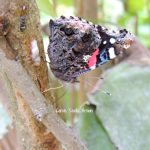
You can set plates of over-ripe fruit at ground level for the Robins to enjoy. The added bonus of this is that you will also attract several types of butterflies, such as Painted Ladies and American Ladies.

What are the Robins doing in your wildlife garden? Are they building their nests yet? What funny antics have you seen them do?

    © 2010, Carole Sevilla Brown. All rights reserved. This article is the property of EcosystemGardening.com If you are reading this at another site, please report that to us

    Related Posts with Thumbnails
      About Carole Sevilla Brown

      Carole Sevilla Brown is a Conservation Biologist who firmly believes that wildlife conservation begins in your own back yard. Carole is an author, educator, speaker, and passionate birder, butterfly watcher,  and naturalist who travels around the country teaching people to garden sustainably, conserve natural resources, and create welcoming habitat for wildlife so that you will attract more birds, butterflies, pollinators and other wildlife.. She gardens for wildlife in Philadelphia, zone 6b, and created the philosophy of Ecosystem Gardening. Watch for her book Ecosystem Gardening, due out soon. Carole is managing editor of  Beautiful Wildlife Garden, and also  Native Plants and Wildlife Gardens. Follow Carole on twitter, @CB4wildlife and on Google+

      Comments

      1. Alison Kerr says:

        Last Saturday there was a robin sheltering from the snowstorm in the lee next to my house. It was enormously fluffed up and looked quite bizarre.

        I saw robins in my neighborhood throughout the winter and was wondering why people say it’s a sign of spring to see them returning, unless you’re in Minnesota or something, where I think they do leave.

      2. I have had Robins all winter… now there are even more… the ground seems to be in constant motions from all the little bodies tossing up leaves and such. I never do water though… there are plenty of streams around but I would love to see them all playing around in the water! ;>)
        .-= Carolflowerhill´s last blog ..A Connection to Trees in a New England ‘Landscape Garden’ =-.

      3. We have them, of course, in the winter. But its the spring that I sit up and take notice! H.

      4. Baric says:

        I learned about this just a couple of years ago, when we started using our heated birdbath. Now,they come in droves all winter long, drinking from the watering hole! They even eat from my birdfeeders…trying to find fruit and insects, I’m sure.
        Baric recently posted..Scientists bred cows that produce human milk

      Trackbacks

      1. [...] birds are slow birds, and frozen feathers are not helpful in escaping predators. During the winter, the Robins line up at this water to get a drink, which is so much fun to [...]

      2. [...] But many people have noted that one of their biggest signs that spring really is coming is that the Robins have returned. [...]

      Speak Your Mind

      *

      CommentLuv badge