Helping Your Neighbors Learn to Love Wildlife

by Carole Brown · 22 comments

in The importance of your garden

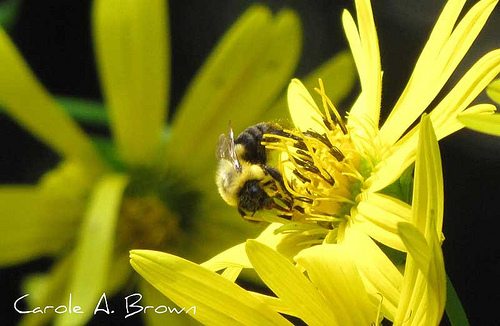
Bee-on-Cuplant
I received an email from my friend, Lisa Gustavson at Get in the Garden, which, while sad, gives us an opportunity to to come together to  brainstorm solutions. The email said:

Thank you for letting me bend your ear! I’m growing a bit frustrated and thought you may be able to share a bit of wisdom. Spring hasn’t even arrived and the neighbors (we are friends as well) are plotting to remove the “wild animals” from the area. Mind you the “wildest” animal that has appeared is a small fox and I was THRILLED! We have possums, woodchucks, deer and a slew of snakes and other small critters. It’s quite the little habitat. :-)

At first I don’t think anyone really “noticed” them. As others have begun to plant gardens etc. the populations are increasing and the neighbors aren’t thrilled. Bugs=bad enough, wild animals=BAD. I’m working to educate them, I’ve been on a soapbox for months. I’ve seen possums shot (yes, quite illegal in our town) and woodchucks trapped with the same fatal intention. We were able to get the trap and transport the animals to a local park instead. I was aware at the time that the odds of survival were not good, but not good is better than none.

I’m stumped! We’re in what was once an agricultural town which is now undergoing a population explosion. Of course the natural habitats of many animals has been destroyed and they’re looking for a safe place to live. Our yard is not huge (1/2 acre total) but being the only one on the street with mostly gardens it naturally attracts everything. How do we create a peaceful co-existence here? I can’t stand the thought that every animal that shows up is going to be removed, trapped or killed if we’re not here to stop it. Any advice is greatly appreciated…though we’ve been living with “critters” for a few years I think we’ve been found out.

Thanks for taking the time to read this, I’d love to hear any ideas you have!

My first response: I would be so thrilled to see a fox in my neighborhood!

Why do we kill what we do not like?

I am very saddened that we live in a world where our first response is to kill what we don’t understand, don’t like, or are afraid of. We see this tendency in bug zappers, pesticides, and shooting opossums, coyotes, wolves, snakes, and raccoons. We say “That critter is some kind of inconvenience to me, so let me kill it.”

We are killing in more subtle ways, too. In our continual march toward “progress” and “development” we are killing all manner of wildlife by destroying their habitat and leaving them no place to go.

All too often gardeners who want to reverse this trend by giving something back to wildlife are met with resistance, anger, and rules to prohibit this behavior.

I have a friend who has been fighting her township for years because she has a wildflower garden in her front yard. Because it is not the traditional lawn, her neighbors continue to file complaints against her with the township, who in turn proceed to levy fines and directives to get rid of the “eyesore which may harbor rats.”  Never mind that this meadow is full of many different kind of beautiful butterflies from spring through fall.

How do we educate our neighbors, and help them to at least respect wildlife if not learn to love it?

Here’s some things I’ve done to encourage more respect for wildlife:

  • When I divide my native perennials, I make gifts for my neighbors and always tell them “This one is really great for butterflies” or “Hummingbirds just love this” They may not care about that, but they appreciate the gift and plant them in their yards.
  • I talk to the neighborhood kids and show them birds nests, baby birds, butterflies, hummingbirds, or any of the other critters in our neighborhood. Kelly Senser talked about nurturing the Sense of Wonder with her kids, and I try to do that with all of the children in the neighborhood. Adults may be less likely to kill what their children love.
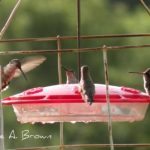
  • Most of my neighbors use Facebook, and ironically we often have more communication this way than any other way, especially in the winter. My status updates are often about the wildlife in my yard: the first hummingbird of the season is at my feeder; there is a pair of Eastern Screech Owls calling back and forth; a Monarch Butterfly emerged from its chrysalis today, etc. Some of my neighbors have been inspired to ask me how they can see wildlife in their yards, too.
  • I lobby the city to stop mowing the medians and roadside edges and especially to stop spraying them. Seems like a win-win to me: the city saves money and wildlife gets some habitat. We have won that argument several times.

These are just a few suggestions for enlisting your neighbors to create habitat for wildlife and educate them on how to help wildlife instead of killing it.

But that is just the beginning. This is a conversation that needs to happen around the country, and can definitely benefit from the wisdom of all of you. So how would you answer Lisa’s question? What have you done in your neighborhood?

© 2010, Carole Brown. All rights reserved.

Related Posts with Thumbnails

{ 19 comments… read them below or add one }

1 Alison Kerr

Lisa, it sounds like you have a wonderful garden. How exciting to have all those critters nearby!

As to the problem, I don’t have any real suggestions. I think there are 2 barriers you are facing. People are scared of things they don’t understand. Some critters do damage property and/or can be harmful to people – I don’t think anyone wants them inside the home. Mice chewed telephone cables inside my home one time. Chewed power cables would be a fire risk (some rodents will do this). Squirrels have chewed my deck and a concrete board windowsill. Birds nesting in the attic bring in things like silverfish and carpet beetles. In the Kansas countryside wood rats (packrats) are a problem – they nest inside parked vehicles and within 1 week can cause significant damage through chewing cables. One person I heard of had a vehicle fire caused by this. Another had damage to their brake cable. Most people would rather just not have to deal with critters near their home on top of all the other things they are taking care of. This is where the second factor comes in, value system. If your value system does not include respecting and appreciating wildlife then why would you be open to dealing with risk from it?

That doesn’t solve any of your problem, does it?
Alison Kerr´s last blog ..Why Do You Garden? My ComLuv Profile

Reply

2 Rosemary

Lisa, why exactly do your neighbours want the animals removed?

If the animals are actually causing problems (e.g. racoons turning over garbage cans and making a huge mess) maybe you could help your neighbours find better ways to prevent the problems?

On the other hand, if they have unrealistic fears (e.g. that a garter snake is a danger to their kids or pets) you could educate them a bit?

Removing or killing the animals is not just unethical, it is not going to work, as more will just come in to take their places. Hopefully you can find a way to help your neighbours peacefully co-exist with them.

Alison, when I was too young to remember, we had a flying squirrel living in our home (came on its own, not a pet), and it wasn’t a problem. My mom photographed it sitting in our Christmas tree!
Rosemary´s last blog ..Probably not Zizia aurea seedlings My ComLuv Profile

Reply

3 Lisa

No, but you raise valid points that are right on! I agree about the inconvenience, we’ve had mice chew under the siding and get inside…cats took care of that. That also illustrates what’s happening outside. Rabbits and mice showed up first when we began planting. Now we have possums, snakes, a fox, deer, woodchucks, a weasel and a falcon. All of which eat mice among other things.I believe that over time the eco-system balances itself…if human intervention would let it. Most of our neighbors are from what I call the “Raid generation”. Have bugs? Spray them. Mice? Get poison. Large animals? Pellet guns. So many have become disconnected from nature’s life-cycle! I feel like I’m luring wildlife to its impending death by having gardens in the yard. It’s so unfair…

Reply

4 Alison Kerr

“I believe that over time the eco-system balances itself…if human intervention would let it.”

Yes, I agree, but not to a complete extent. Natural systems will balance themselves, but when we throw our own stuff into the system we then need to expend energy/time/money to control. For instance, we might supply wood rats with great homes in the form of a stationary vehicle. There might be snakes nearby which feed on the wood rats, but that is no comfort to the vehicle owner who’s brake cables will be chewed if there is no physical barrier to entry. Now the vehicle owner can: take the “bomb” approach and try and wipe out every wood rat; pay to build a wood rat proof garage to house the vehicle; or give up driving.

Reply

5 Carole Brown

“The Raid Generation” is quite funny as a description, but sadly names a practice that comes, as you’ve said, from a disconnection from nature.

Yes, the ecosystem balanced itself for millenia, until we humans took it upon ourselves to cover the face of the earth with non-porous paving, introduce all manner of invasive organisms, and destroy all wildlife habitat. Now ecosystems are having a much harder time achieving any kind of balance.

The sad fact is, that for many species of wildlife, our gardens are the only place left for them to go. And this is the crux of the problem as many folks consider all wildlife to be garden pests.

Reply

6 Rosemary

Here’s a website that seems to have a lot of good information (I’m just reading it myself).
Rosemary´s last blog ..Probably not Zizia aurea seedlings My ComLuv Profile

Reply

7 Rosemary

Sorry, forgot the link! http://wdfw.wa.gov/wlm/living/
Rosemary´s last blog ..Probably not Zizia aurea seedlings My ComLuv Profile

Reply

8 Carole Brown

Thanks for the link, Rosemary. There is some great stuff there.

Reply

9 Lisa

True, of course, we are accounable for the “homes” we provide to wildlife. We haven’t had any complaints of nuisance or damage, there’s just the prevailing notion that yards and wildlife don’t mix… if wildlife shows up it needs to be removed. As a wider variety of animals move into the neighborhood (others are planting gardens now) I fear reckless and unnecessary killing. I LOVE the link Rosemary! Thank you!! I ‘m going to share it with our friends and neighbors and maybe we can learn together! :-)
Lisa´s last blog ..Why I Garden My ComLuv Profile

Reply

10 Alison Kerr

Lisa, I hope you’ll soon have a few converts to the joys of sharing gardens with wildlife.

Reply

11 Carole Brown

Lisa, sometimes I find that attempting to educate my neighbors is just too exhausting and often pointless. But then one neighbor will express interest, and I become so excited it wipes all those other feelings away. I try to focus on those good events as much as I can.

Reply

12 Lisa

Small success! I’ve had an opportunity to share this discussion with one friend/neighbor and we were able to agree on a few points. Taking the time to observe the fauna as well as the flora teaches us so much! She has agreed to wait and watch before acting when wildlife appears in her yard. I may have found an ally! That’s how it starts…one person at a time. (I do believe in miracles…I think that helps!!)
Lisa´s last blog ..Flower Power My ComLuv Profile

Reply

13 judyofthewoods

It is one of those areas I do feel so hopeless at times, but once in a while I see a glimmer of hope. I really like the idea of educating children. Nothing like a little guerrilla tactics ;-) Education will have to be the long term solution, but for the short term, where there is a direct and immediate danger to the life of wild animals. The only thing that I can think of (other than what you say about removing the trap and releasing an animal) is to maybe surreptitiously spray a neighbor’s yard with some kind of odorous repellent, or get them to do it. I believe there are some sprays which deter various types of animals. Not the easiest or cheapest way, alas, but all I can come up with.

Unfortunately education often needs to appeal to the person’s own interests for it to work, like the fact that killing wildlife will upset the natural balance and be of long-term damage to all life on earth, including man. As long as man sees himself as something separate from the rest of the animal kingdom and nature, it is an uphill struggle and probably a loosing battle. Still, we soldier on, one convert at a time. Hopefully we’ll reach critical mass for it to turn around.

I am really glad there are people like you to help make a difference. Thanks.
judyofthewoods´s last blog ..Other bits of News My ComLuv Profile

Reply

14 Lisa

(I’m not proud to admit I have sprayed repellents late at night while the neighbors are away.) Today (2/23) an elderly neighbor friend stopped over. He stayed for 3 hours and we talked among other things about wildlife in my yard. In the time he was over he mentioned 5 different bird species he saw out the window as well as rabbit tracks. When I told him of the deer and other animals he asked HOW TO GET THEM IN HIS YARD! Yes, today was a small gift for me. We’re not alone in this! I think education is key as well as teaching tolerance. Hooray!
Lisa´s last blog ..Winter Interest Wednesday My ComLuv Profile

Reply

15 Carole Brown

Lisa, I so love your gentle approach! Yay, you for teaching your neighbors in such a wonderful way.

I don’t think we can win people over by being some kind of in your face eco-dictator. That’s not a way to make friends at all. I want to find ways to encourage people to take whatever small steps they can: plant one native plant, put up one hummingbird feeder, make a wildlife pond not a koi pond. These small steps usually encourage people to want to make another step, and another after that. I want to be able to celebrate every one of these small steps.

Reply

16 Parson's

Many people are turning to organic ways of dealing with pests, so that it does not harm the environment, but there aren’t really any alternatives for dealing with pests without killing them.

Reply

17 Carole Brown

Parson, I think you may just be a little biased because you are an exterminator. Not knocking that at all, but killing wildlife is never on my list of options. I’m hopeful that many others will remove killing from their list of options too.

Reply

18 Betsy S. Franz

I just recently found the Ecosystem Gardening website but Carole seems to be my long lost twin when it comes to opinions about gardening for wildlife. I think this site is wonderful!

I think that the best thing we can do is to continue to set a good example for our neighbors. It took awhile for re-usable shopping bags to catch on, but they did. Hopefully, wildlife friendly landscapes will follow suit.

Below is an excerpt from the book How to Take Care of Your Share of the Planet

How to Influence Others
 Educate Your Neighbors. Adjacent yards with wildlife habitats are even more effective. Share seeds, cuttings and informa-tion with neighbors that are interested in creating their own habitat.
 Share your stories, your pictures and your journal with neighbors and friends. Enthusiasm for wildlife is contagious!
 Have your yard certified in the National Wildlife Federation Backyard Wildlife Habitat program. Erect a sign and display it proudly.
 Share cuttings and seeds of native plants or wildlife friendly plants at garden club meetings or plants swaps.
 Remember, your goal is to educate, encourage and assist, never coerce. Enthusiastic wildlife gardeners are much better received than arrogant or extreme environmentalists are.
 Submit wildlife friendly topic ideas to local newspapers.
 Help schools to create schoolyard habitats or butterfly gar-dens.
 Open your yard to garden tours and explain your wildlife ha-bitat elements to visitors.
 Participate in on-line wildlife and garden forums.
 Give a copy of How To Take Care of Your Share of the Planet as a gift.

Reply

19 Carole Brown

Thanks for the great suggestions, Betsy. I’d love to review your book here at Ecosystem Gardening. It looks like a winner to me.

Reply

Leave a Comment

CommentLuv Enabled


{ 3 trackbacks }

Previous post:

Next post: