Native Alternatives to Invasive Plants

by Carole Brown · 8 comments

in Invasive Plants

The UN has just announced that invasive species and climate change are the biggest threat to ecosystems and biodiversity. The cost of controlling invasive plants in the US is estimated at more than $138 billion every year. But invasive plants continue to be sold by the horticultural trade who have turned a blind eye to this problem in the pursuit of profits.

This attitude is completely irresponsible and short-sighted. Please educate your local nursery about the dangers of invasive plants. The damage to ecosystems and endangered wildlife that is caused by invasive plants is enormous. Each of us must take responsibility for the removal of invasive plants from our Ecosystem Gardens.

Here at Ecosystem Gardening, we have a growing rogues gallery of some of the worst offenders on the “Most Hated Plants” list, including Norway Maple, Brazilian Pepper, Paulownia, Chinese Lespedeza, with more to be added every week.

OK, you say, I get the point. Invasive plants are bad. But how do I know what’s good?

The good thing is there are many resources for choosing native alternatives to invasive plants. Start with the Top 10 woody plants for attracting wildlife to your Ecosystem Garden and the top 10 herbaceous plants for attracting wildlife to your Ecosystem Garden.

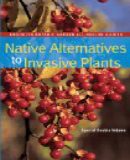
Then check out this great book, Native Alternatives to Invasive Plants, by the Brooklyn Botanic Garden. Native Alternatives contains a photographic encyclopedia of many invasive plants with the reasons why the horticultural trade thought they were great landscape additions.

For each plant Native Alternatives lists at least one, but often several, native alternatives to these invasive plants, with reasons why they better meet the conditions for planting given by the horticulturalists and landscape designers.

Native plants support much more wildlife than do exotic plants without the harmful ecosystem impacts of invasive plants. Please, when adding a new plant to your garden, do NOT plant any invasive plant and remember that native plants are much better for providing habitat for wildlife.

Use this guide to finding reliable native plant nurseries in your area.

Let’s discuss your favorite native plants or your worst nightmare invasive plants in the comments below.

Note: I greatly appreciate your purchasing this book through my affiliate link. I get a small commission which helps support me in bringing you new information on this site.

© 2009 – 2010, Carole Brown. All rights reserved.

Related Posts with Thumbnails

{ 5 comments… read them below or add one }

1 Alison Kerr

Thanks for the book recommendation Carole. One question, does this book cover plants for all areas of the USA? If so, it goes on my wishlist.

Right now I want to find an alternative to both yew and burning bush. These are the shrubs I inherited with my house. They are planted on a north facing side of my home to hide the foundation of the front porch. Do you have a suggestion for something native to use instead? It needs to be shade-tolerant, about 3-6 feet in height and trimmable to less than 3 feet wide. I don’t know of anything native and evergreen to replace yew, so I’d like something with winter interest if possible.
Alison Kerr´s last post ..10 Tips I’ve Learned from Greening My Home My ComLuv Profile

Reply

2 Carole Brown

Alison, Native Alternatives covers most of the US, but for those who live in Florida, they’d probably want a resource specific to that state. There are several native yews, Pacific Yew (Taxus brevifolia) which appears along the west coast, and American Yew (Taxus canadensis) which gets as close to you as Iowa. I’d check with your native plant society to see if it will work for you. What you need is an evergreen, shade-tolerant, berry-producing, low-growing shrub. Don’t mean to pass the buck, but that’s a lot of criteria for a locale that I’m not expert in. Some of the hollies may work, maybe winterberry, but see Kansas Native Plant Society for help.

Reply

3 Ellen Sousa

Alison, how about Inkberry Holly? (Ilex glabra). It is evergreen and fairly shade tolerant. The birds like the berries too…

Reply

4 Alison Kerr

Ellen, that sounds an interesting suggestion. It’s not native to Kansas though – I’m not sure how I would feel about using it here. I don’t think there are any hollies native to Kansas.

Reply

5 Bethe

Love it — glad to see this book. A great online resource for folks is eNature: http://enature.com/native_invasive/

Cheers- Bethe
Bethe´s last post ..“Pro Players”: Who’s in the Sandbox? My ComLuv Profile

Reply

Leave a Comment

CommentLuv Enabled


{ 3 trackbacks }

Previous post:

Next post: