
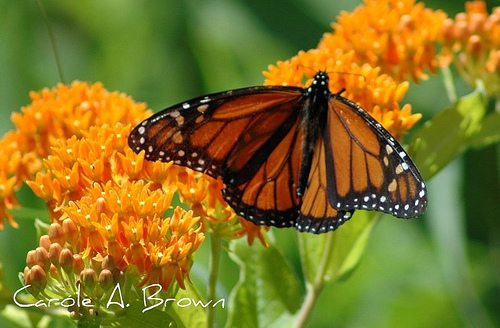
The Monarch Butterfly winter population in Mexico is the lowest it’s been for 15 years.
According to Mike Quinn at Journey North:
This week, 36 hours of continuous rain fell primarily across the eastern portion of Michoacan, and to a lesser extent throughout much of central Mexico.
Heavy rain followed by a freeze killed as much as 80% of the monarch overwintering colonies in Jan/Feb of 2002 and 2004, but those years had the highest monarch populations of the decade. Unfortunately, this winter the monarchs are at their lowest recorded level in the past 15 years.
Monarch overwintering population estimates 1995-2010 – Journey North Lincoln Brower contacted colleagues in Mexico yesterday February 4 and relayed the message that Pablo Span visited the Pelon colony on Tuesday 2 February and said “there were more (presumably dead) monarch butterflies on the ground that he had ever before seen.”
It will be awhile before a clearer picture emerges as numerous cities across the region experienced severe flooding, landslides and bridges being washed out. Obviously a human as well as a potential biological tragedy has occurred.
Life cycle of Monarch Butterflies
Every spring Monarch Butterflies leave their wintering grounds in Mexico and begins a journey north. They will fly as far north as they can in search of milkweed. Here they will lay their eggs and die.
The next generation goes further north still, mate lay their eggs and die. This cycle is repeated until the Monarchs have populated all of North America.
In the fall, however, the last generation does not yet breed, instead flying from Canada and across the US all the way back to the wintering grounds in Mexico, where if it is lucky enough to survive the winter, will breed and begin the journey north once again.
Monarchs arrive in Mexico by the thousands, tattered and worn, and exhausted from this amazing journey.
What You Can Do to Help Monarch Butterflies

Plant milkweed. Monarch caterpillars must have plants from the family Aesclepias in order to grow and survive into adulthood.
Go to the USDA plants database to determine which species are appropriate for your region.
Unfortunately, current agricultural practices and management of roadside edges require the application of herbicides which wipe out many areas of milkweed. So Monarchs must fly longer and use up more energy before finding milkweed on which to lay their eggs.
When the wintering population is already so low, lack of milkweed along the journey north may have catastrophic consequences on this amazing butterfly.
Give generously to organizations like Monarch Watch who are researching this population and managing conservation efforts.
What are you doing for Monarch in your garden? What milkweeds do you plant?
More From Ecosystem Gardening:







Submit your review | |
Loved your informative site!
I am fortunate that I’m able to have a little milkweed patch in frontt of my apt in Colimbus, Ohio
This year they are eating my Michigan milkweed (pokeweed), a few munching my pink @ white sesmp milkweed? & none on my orange butterfly milkweed
3rd yr raising monarchs
This yr w/just 2 butterfly habitats ; so far iI’ve released 2 generations; 16 ct
Now, I keep bringing in more chompers, but obviously I was running out of milkweed
So, I wanted to spread the word that my chompers are eating curly parsley, cucumber & butternut squash. Will be going back to Krogers to pick up more bags of frozen butternut squash!!!
So, this yr it looks like I will have st least 40 releases!
Much love to you all
I plan to do a youtube,
Peace & Joy
Making s difference through love!