Choosing the Best Plants for Your Ecosystem Garden

by Carole Brown · 6 comments

in Plants

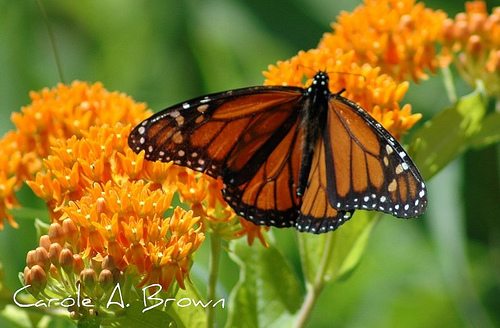
Monarch on Milkweed

Native Plants support wildlife

“What should I plant?” is the most frequent question I receive from people who are interested in creating habitat for wildlife in their gardens. For all of you who have the same question and want to discover how to choose the best plants for your Ecosystem Garden, I have some answers for you. You may want to bookmark this page because new articles will be added regularly. Read on….

The Top 10 Best Woody Plants for Your Ecosystem Garden–you get a big bang for your buck by planting trees and shrubs with the highest wildlife value.

The Top 10 Best Herbaceous Plants for Your Ecosystem Garden–choose from these favorites and create a beautiful butterfly garden.

Native Plant Nurseries of the US and Canada–a guide to finding the best native plant nursery near your garden.

What Makes a Plant Invasive? The First Lesson in What NOT to Plant–invasive plants are destroying wildlife habitat and wreaking havoc in native ecosystems.

Throw Away the USDA Hardiness Map, the Second Lesson in What NOT to Plant–learn how to discover which plants are locally native and most appropriate for your garden.

Native Alternatives to Invasive Plants–finding the best native plants to replace those nasty invasives is easy with this guide.
Introducing the Sibley Guide to Trees–getting to know your local native trees

Bringing Nature Home to Your Ecosystem Garden–Doug Tallamy explains why native plants are crucial in creating habitats for wildlife in your garden.

© 2009 – 2010, Carole Brown. All rights reserved.

Share and Enjoy:
  • Twitter
  • StumbleUpon
  • Digg
  • Facebook
  • del.icio.us
  • Technorati
  • Reddit
  • Print
  • email
  • RSS

{ 2 trackbacks }

Ecosystem Gardening Best of the Web #12 | Ecosystem Gardening
21/11/2009 at 1:02 pm
Wildlife Gardeners learn when experts are wrong
05/03/2010 at 11:45 am

{ 4 comments… read them below or add one }

1 Robin 18/11/2009 at 10:39 am

I have a question – are tulips considered appropriate in ecosystem gardening on the East Coast?
Robin´s last post ..Put the meaning in the greening this Thanksgiving My ComLuv Profile

Reply

2 Carole Brown 24/11/2009 at 6:15 pm

Robin, the biggest problem with tulips is squirrels. You can spend hours and getting them in just the right place, only to discover the following year that now they’re coming up in the middle of your pathways because the squirrels have moved them (the ones they don’t eat, anyway). I’ve never seen tulips growing in wild places, and this is mostly because they don’t last for that many years. I have seen daffodils growing in open woodlands because the squirrels don’t really like to eat them. I don’t think either are considered invasive. So, if you want tulips, here’s a trick: put a daffodil bulb in the planting hole on top of the tulip. This works best if you use varieties that bloom at different times. But the daffodil bulb (sometimes) keeps the squirrels from getting at your tulips.

Reply

3 Alison Kerr 18/11/2009 at 1:19 pm

Once again Carole, a great list of resources for nature gardening inspiration. I’ll be back as I plan expansion of the wildlife suitability of my garden.
Alison Kerr´s last post ..Squirrel Tracks in the Snow My ComLuv Profile

Reply

4 Rosemary 05/03/2010 at 12:29 pm

Awesome resources for North American gardeners, I’d just like to remind readers new to wildlife gardening that any list of best plants is totally dependent on location. Even within North America, a plant that is a valuable native in one area can be a problematic invasive somewhere else (e.g. Manitoba maple Acer negundo, which the Ontario Society for Ecological Restoration considers one of the worst invasive species in southern Ontario (PDF) even though in nearby provinces and states it is native.)
Rosemary´s last blog ..Matthiola incana ‘Vintage White’ seeds: a promise of a fragrant summer! My ComLuv Profile

Reply

Leave a Comment

CommentLuv Enabled


Previous post:

Next post: