Oil Spill and Our Gardens

Oil spill impacts on wildlife

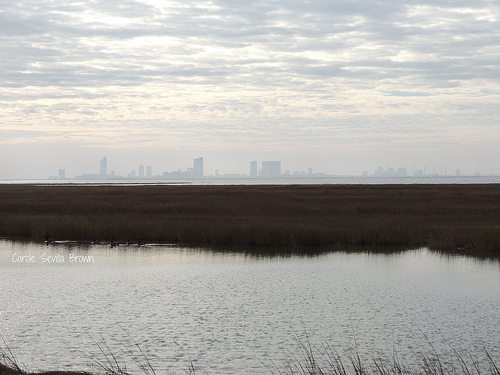
As oil continues to spew into the Gulf of Mexico, people’s livelihoods are being destroyed, nesting bird colonies are being wiped out, sea turtles and dolphins are being washed up on shore, and wildlife around the region is being severely impacted.

I have to say that I start sobbing every time I see a photo like the one above. I cry every time I watch the news. It is just so heartbreaking to see all of this destruction.

And what, exactly, does this have to do with our gardens? Good question!

Until each and every one of us, as individuals, as cities, as states, and as a country address our own use of fossil fuels and find ways to decrease our use of them, we will always have the threat of more environmental disasters hanging over us.

The only way to reduce that risk is to reduce our need for oil.

And yes, each of us can make a start in that direction by looking at how we garden. I talked about this goal when I spoke with Chris McLaughlin about the benefits of composting.

I stood this weekend in a Home Depot parking lot and watched cart after cart of bags of topsoil, fertilizer, peat moss, and other ammendments leave the store.

Not to single out Home Depot, this scene is repeated across the country at Lowes, Walmart, Kmart, and garden centers. And it is a perfect illustration of the way we garden.

Let’s break it down:

  • All of those plastic bags holding the topsoil, fertilizer, peat moss, etc are made from petroleum
  • All of those bags are picked up at the manufacturer and trucked across the country to the distribution centers for each of these big box stores
  • Then they are packed up and trucked again from the distribution center to each individual store
  • We get in our cars and trucks and drive to these stores to purchase these and drive them back to our homes
  • Chemical fertilizer is a petroleum product

This distribution loop alone accounts for an enormous use of gasoline as these products are transported from place to place.

We could eliminate most of this consumption of fossil fuels by simply composting our yard waste and kitchen scraps. It really is that simple.

Now let’s take a look at our gardening practices in our own yards:

  • We spend every weekend mowing our lawns with gas powered mowers
  • We’ve got gas trimmers, chain saws, leaf blowers, tillers and any number of other gas-powered tools that fill the air with noise as well as pollution
  • We bag up all of our leaves and set them out on the sidewalk where they are trucked away to landfills or municipal composting centers, instead of composting them on-site
  • We apply our bags of potions that we’ve transported home from the garden center

We cannot afford to wait until Congress gets around to addressing our energy use. We cannot afford to wait at all.

Each of us needs to look at our own garden (and the rest of our lives too) and find ways to reduce our own use of oil. Here’s some ideas to get you started

  • Reduce the size of your lawn so that there is less to mow
  • Compost your yard waste and kitchen scraps
  • Use hand tools whenever possible as opposed to gas-powered tools
  • Stop participating in the cycle of those plastic bags of chemical fertilizers, top soil, etc. If you compost, you don’t need that stuff
  • Let the leaves break down where they fall. A lot of wildlife makes their home in the leaf litter, so don’t throw this valuable resource away.

What are you doing in your garden to reduce your use of gas? Let us know by leaving a comment. If you’ve got any other ideas, we’d love to hear them

Don’t miss a thing! Sign up for Wren Song, the Ecosystem Gardening Newsletter. Coming to your inbox every Wednesday, Wren Song brings you breaking news and tips for planning your Ecosystem Gardening. Just fill in the Wren Song coupon at the top right of this page

© 2010, Carole Sevilla Brown. All rights reserved. This article is the property of EcosystemGardening.com If you are reading this at another site, please report that to us

Related Posts with Thumbnails
    About Carole Sevilla Brown

    Carole Sevilla Brown is a Conservation Biologist who firmly believes that wildlife conservation begins in your own back yard. Carole is an author, educator, speaker, and passionate birder, butterfly watcher,  and naturalist who travels around the country teaching people to garden sustainably, conserve natural resources, and create welcoming habitat for wildlife so that you will attract more birds, butterflies, pollinators and other wildlife.. She gardens for wildlife in Philadelphia, zone 6b, and created the philosophy of Ecosystem Gardening. Watch for her book Ecosystem Gardening, due out soon. Carole is managing editor of  Beautiful Wildlife Garden, and also  Native Plants and Wildlife Gardens. Follow Carole on twitter, @CB4wildlife and on Google+

    Comments

    1. UrsulaV says:

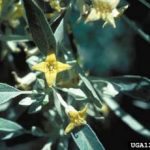
      So I was reading a book on permaculture t’other day–quite a good book in most regards, but the author was a little too fond of some species that are horribly invasive down here. (While simultaneously having nothing nice to say about bindweed and Himalayan blackberry–I suppose it’s all in what you’re used to fighting with.) One of the species he was touting was Russian/autumn olive, which is edible! and a nitrogen fixer! and a great wildlife plant! but in my neck of the woods is also dire! and pernicious! and spreads like the devil!

      Anyway. Two or three times a year, I spend a morning with the little hand clippers chopping back the autumn olive lining the driveway. The stumps are fairly unkillable without recourse to major herbicides, so…I chop. And this morning, as I had gathered a large pile of autumn olive branches, it suddenly occurred to me…hey, nitrogen fixer! And I’ve been in the process of building a hugulkultur–a raised bed on a base of cut branches–in the backyard, and here were branches that would decompose and provide nitrogen, so rather than leave ‘em where they fell, I dragged them all in the back and used them as the base layer of my hugulkultur bed. The primary source of the branches is the contractor’s boxwood foundation planting, which I am killing with prejudice, but if I’m lucky, this should add a significant slow-released nitrogen boost to the bed. (No berries yet, so no chance of growing more out, either.)

      So an invasive species will hopefully do some good for a change, the bed will require less fertilizer, and if the gardening gods are kind, a few years of intense and merciless pruning will eventually convince the bloody autumn olive to give up the ghost. (Please, god, let it give up the ghost!)

      • Carole Brown says:

        It’s such a bummer that some authors are still touting Russian Olive! It’s horribly invasive and there are so many better native plants for wildlife.

        But I’m so thrilled that you’ve found a use for it. I’m keeping my fingers crossed that the gardening gods are listening. LOL

    2. Great topic! Also look for LOCALLY grown plants – many annuals are trucked in across the country – buy from local plant growers – your farmers market is a great source too of veggie seedlings, herb plants, etc.
      Kathy J, Washington Gardener Mag recently posted..Divine Annual Vines featured in June issue of Washington Gardener Enews

      • Carole Brown says:

        Great tip, Kathy, thanks! Locally grown plants (and food) would make an enormous difference if we all did it.

    3. Nancy Sakaduski says:

      SUCH an important message, with or without the oil spill!

    4. Birdy says:

      Oh, good grief – what’s wrong with boxwood???!!!

      Carole – suggestion for when you do the ‘please don’t plant’ posts – pls add a section where you also give reasons & ALTERNATIVES that are similar but less invasive, as the lovely Squash Lady did for my morning glory.

      In response to your actual post:
      As I said to Mark Silver, I don’t think we need to ditch so much as change our choices to more consciously-made ones.

      I agree – way more composting, way less chemical crap.

      Another thing you didn’t add – the bags are not considered recyclable because of the matter inside. :-(

      Thank you for backing me in the fight against leaf-removal. I ended up ignoring our housie-who-owns-the-house last year to a certain extent – bedding leaves in since leaving them on the lawn would have just started a situation that would have ended up getting us thrown out.

      I got a compliment from one of our neighbors at the Solstice ceremony about how good the big bed looks this year.

      Where the leaves were thick – the weeds have not shown up nearly so much, while the stuff that was supposed to come up has, and come up better, happy for the nutrition.

      Does she see it? No. And this year, since the city is finally going to a more usable method of leaf-removal, I’m not going to argue. Not my house, not my fight. I apologize to the land every time I can.

      It’s a great trick for the city – getting folk to pay to get their own composting back, but yeah, the time & energy it takes is appalling.

      Btw, I gather there has started to be a Renaissance in hand-push-mowers. Could be an alternative for those who want more lawn, but less oil-based-use.

      I know I use only hand tools – I’m afraid of electric tools. My kitchen stuff is mostly by hand too – I must be just about the only modern cook who doesn’t use a food processor.

      Good Fortune with it all! :-)
      *hugs!*

      • Carole Brown says:

        Birdy, I’ve collected some boxwood references for you, starting with this one that really made me laugh because it’s true developers really do this

        Here’s a link from the LadyBird Johnson Wildflower Center about a native alternative for boxwood if you live in Texas.

        Where do you live? I can’t really recommend native alternatives without knowing that because the answer will be much different if you lived in Florida than if you lived say in Michigan.

        Boxwood has become invasive in some areas but the biggest problem is that they are resource hogs. They suck the moisture and nutrients from the soil while providing absolutely no value for native insects and wildlife. Basically, they take without giving back.

        • Birdy says:

          Oh, sorries, I thought you knew from the fora that we live in Michigan.

          Well, there was one time at least a boxwood was useful to the local fauna. I remember very clearly the succession of momma robins used to live in the boxwood by our house in Athens, Ohio, when I was a small-small. May have been the only time, and I don’t know how native robins are either, but it’s a small something at least.

          • Carole Brown says:

            I thought it was Michigan, but I wasn’t sure. Robins are indeed native and I’m glad they found a safe place for their nest. The only birds that you have to watch out for are House Sparrows and Starlings. Both imported from Europe, both a big threat to native nesting birds. I’ll do some research on some native alternatives for you.

        • Birdy says:

          I’m sorry – where are my manners? Thank you for giving me some links to look at. :-) This is exactly the kind of thing I was asking for on the forum. :-)

    Trackbacks

    1. [...] This is a wake-up call, and we need to take a hard look at our own use of fossil fuels in our lives and in our gardens. [...]

    2. [...] Saving energy in our landscapes seems especially important right now in light of how the oil spill in the Gulf of Mexico is impacting the livelihood of the people who live there and the wil…. [...]

    3. [...] Many other choices we make in managing and becoming stewards of our land have regional, national, and even global implications, but the burning of fossil fuels to maintain our perfect lawns seems to be the choice that has the most …. [...]

    4. [...] Humans are blessed with the capacity to learn from situations, assess the consequences, and alter our  behavior in the future. We can learn from our mistakes. Unfortunately, when it comes to the environment, we rarely exercise that capacity (Can we say Oil Spill?). [...]

    Speak Your Mind

    *

    CommentLuv badge